How an Artist's Video Can Tell a More Honest Story

An honest artist's video is not about explaining everything. It is about letting people feel the truth of the work before they have time to judge it.
For musicians, painters, makers, performers, and small creative brands on Vancouver Island, video can become more than promotion. It can be a small window into the world behind the work. The rehearsal room. The workshop. The quiet walk before a show. The weathered hands, the imperfect wall, the half-finished lyric, the space where the real thing happens.
That is where honesty often lives.
In a time when everything online can feel polished, filtered, and optimized, an artist video that feels human can stand out in a much stronger way. Not because it is louder, faster, or more expensive, but because it feels like it belongs to the person on screen.
After more than 20 years behind a camera, I have learned that the strongest videos are not always the ones with the biggest production. They are the ones where every choice, from the light to the edit, serves the artist rather than covering them up.
Honesty does not mean rough or unfinished
There is a common misunderstanding that an honest video has to look raw, handheld, or unpolished. It can, but it does not have to.
Honesty in an artist's video is less about production style and more about alignment. Does the video feel connected to the artist's voice? Does it reflect the emotional tone of the work? Does it reveal something true, even if it is subtle?
A cinematic video can still be deeply honest. Beautiful light, careful framing, colour grading, and thoughtful editing do not make a piece fake. They can actually help focus the viewer's attention on what matters. The problem only starts when the visual style is borrowed from someone else and placed over the artist like a costume.
A quiet folk singer does not need to look like a stadium pop act. A painter whose work is slow and textural does not need a hyperactive edit. A local band with grit and humour should not be flattened into something overly clean if that is not who they are.
The question is not whether the video looks professional. It should. The question is whether the professionalism protects the truth of the artist or hides it.
Less honest choice | More honest choice |
A visual style copied from a trend | A visual language connected to the artist's real identity |
Overly staged moments that feel forced | Directed scenes that still feel natural and lived-in |
Editing that tries to make everything exciting | Editing that follows the emotional rhythm of the work |
Locations chosen only because they look impressive | Locations that carry meaning, texture, or atmosphere |
A performance that feels like an imitation | A performance shaped around the artist's own presence |
Start with the feeling, not the format
Before choosing whether the video should be a music video, profile piece, promo, live session, or short cinematic clip, it helps to ask a simpler question: what should the viewer feel?
Not what should they know. Not what should they buy. Not what platform is this for. Those questions matter later, but they are not the heart of the piece.
For an artist, the feeling might be intimacy, tension, joy, grief, restlessness, playfulness, solitude, or momentum. For a band, it might be the chemistry between people in the room. For a visual artist, it might be the patience of the process. For a dancer or performer, it might be the discipline behind something that looks effortless.
Once the feeling is clear, the visual decisions become easier. The camera movement, pace, locations, lighting, and sound can all be shaped around that emotional centre.
This is where a more honest story begins. It starts before the camera comes out.
Let the artist's real environment speak
Vancouver Island gives artists a lot to work with visually. There is ocean light, forest shade, industrial corners, older buildings, rehearsal spaces, studios, small venues, quiet streets, ferry terminals, back roads, and weather that can change the feeling of a scene completely.
But the most honest location is not always the most scenic one.
Sometimes the best place to film is the cluttered studio where the work is actually made. Sometimes it is a garage in Nanaimo, a small room in Victoria, a backyard, a community hall, a workshop, or the corner of a café where ideas are scribbled down between shifts.
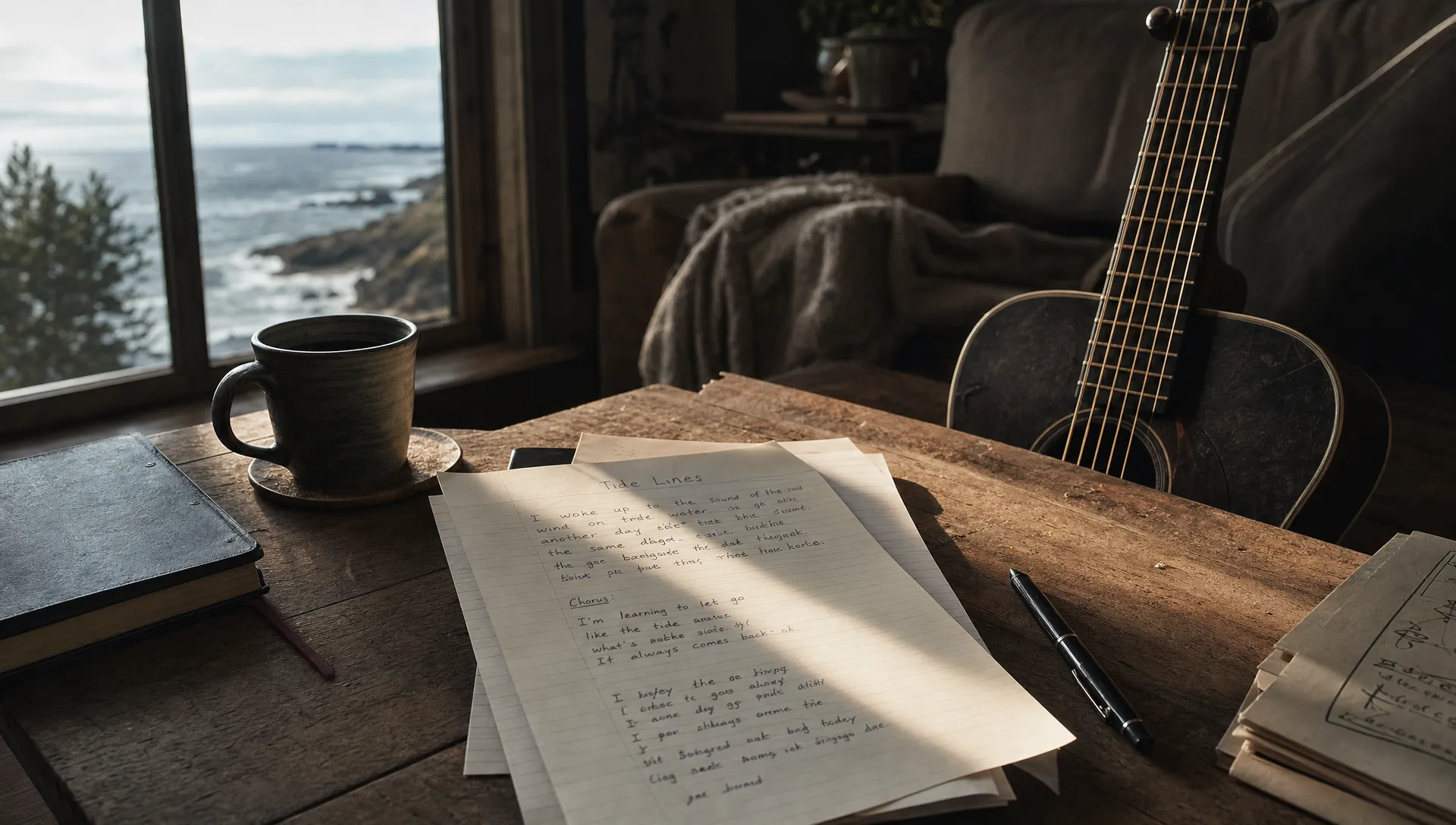
A real environment carries details that are hard to fake. The marks on the floor. The instruments leaning against a wall. The tools. The notebooks. The half-empty coffee. The way someone moves through a space they know well.
These details do not need to be explained. They simply help the viewer believe what they are seeing.
That does not mean every artist video has to be documentary-style. A video can be stylized, poetic, surreal, or carefully staged and still feel honest. The key is to build the style from something true, not from what everyone else is doing.
Small details often tell the bigger story
One of the best ways to make an artist's video feel more honest is to pay attention to the small things.
A close-up of a hand tuning a guitar can say more than a long speech about dedication. A brush being washed out at the end of the day can say something about repetition and care. A musician listening back to a take, not performing for the camera, can reveal vulnerability. A band laughing between takes can show connection without needing a scripted line about friendship.
These are the kinds of moments that make a video feel lived-in.
They also give the edit more emotional range. If every shot is trying to be impressive, the viewer eventually stops feeling anything. But when a video includes breath, texture, silence, and observation, the bigger moments have more weight.
Detail on screen | What it can quietly reveal |
Hands preparing tools or instruments | Craft, repetition, care, discipline |
A familiar room or workspace | Context, personality, daily reality |
Pauses between performance moments | Vulnerability, thought, presence |
Natural light changing in a space | Time, mood, atmosphere |
Imperfect textures and real surfaces | Humanity, place, authenticity |
Performance should feel directed, not forced
Many artists worry about being on camera. That is completely normal.
A big part of making an honest artist video is creating enough direction so the artist does not feel lost, while leaving enough room for them to be themselves. Too little direction can make someone feel awkward. Too much direction can make them feel like they are acting as a version of themselves that does not quite fit.
The sweet spot is different for every person.
Some musicians come alive in performance and need space to move naturally. Others are more internal, and the camera should respect that. Some artists are comfortable speaking about their work. Others communicate more honestly through process, atmosphere, and gesture.
This is one of the reasons I like a boutique, one-on-one approach. When the process is smaller and more personal, there is less pressure to perform for a room full of people. The shoot can stay focused, calm, and responsive. If something feels false, it can be adjusted. If something unexpected feels true, it can become part of the piece.
Honest direction is not about making someone act. It is about helping them feel present.
Avoid the trap of looking like everyone else
It is useful to be aware of trends, especially if you are releasing work online. Short-form clips, vertical edits, behind-the-scenes content, and cinematic teasers can all be useful. But trends should serve the artist, not become the artist.
When every video follows the same pacing, the same angles, the same transitions, and the same colour treatment, it becomes harder to feel the person behind it. The video may look current, but it may not feel memorable.
For artists, this matters because the goal is not just attention. The goal is connection.
A video that tells a more honest story gives people something to remember beyond the algorithm. It helps them understand the world of the artist. It gives them a reason to listen, visit, follow, book, buy, share, or come to the next show.
There is still a practical side to releasing a video, of course. You may need to think about platforms, file formats, social clips, scheduling, captions, and the tools you use to manage your online presence. For that side of things, browsing practical resources like online tool guides can be helpful, especially when you are trying to make the most of a release without getting lost in the technical details.
But the creative foundation should always come first. A well-planned release helps people see the video. An honest concept gives them a reason to care.
How to plan an artist video that feels true
A good planning conversation does not need to be complicated. It needs to get underneath the surface.
Before filming, I like to understand what the artist is making, why it matters, and what should be protected in the process. Sometimes the most important part of the story is obvious. Other times, it takes a little conversation to find it.
Useful questions include:
What part of your work feels most personal right now?
Where does the work actually happen?
What do people often misunderstand about what you do?
What feeling should stay with the viewer after the video ends?
What should the video avoid becoming?
Are there places, objects, sounds, or routines that are part of your creative life?
Do you want to speak directly, perform, be observed, or let the work speak for itself?
These questions help shape a video that is not generic. They also help avoid wasting time on shots that look nice but do not add anything.
The finished piece might be two minutes, thirty seconds, or a series of shorter clips. It might live on a website, Instagram, YouTube, a grant application, an electronic press kit, or a release campaign. The format can change, but the core should remain the same: this is who the artist is, and this is why the work matters.
Honest does not mean telling everything
One of the strongest things video can do is suggest.
An artist's video does not need to include a full biography. It does not need to explain every influence, every struggle, or every detail of the process. In many cases, leaving space is more powerful.
A viewer does not need to know the entire story to feel that something is real. They need enough truth to enter the world of the artist. A mood. A glimpse. A line. A place. A performance. A contrast between what is seen and what is felt.
This is especially true for music videos. A song already carries emotion. The video does not need to translate every lyric literally. It can echo the feeling, create tension, reveal a different angle, or give the viewer a visual memory to attach to the song.
For visual artists and makers, the same idea applies. You do not need to explain the whole practice. Sometimes the rhythm of making, the sound of materials, and the presence of the artist are enough.
Honesty is not the same as overexposure. It is the right amount of truth, shaped with care.
Why a solo filmmaker can be the right fit
For many independent artists, musicians, and small creative businesses, a large production can feel intimidating. It can also make the process feel farther away from the original idea.
Working with a solo filmmaker keeps things more direct. The person you speak with about the concept is the same person thinking about the camera, the edit, the colour, and the final feeling of the piece. There is less separation between conversation and creation.
That can be especially helpful when the goal is honesty.
A smaller process allows for trust. It leaves room for adjustment. It can respond to the artist, the location, the weather, the mood, and the unexpected moments that often become the best part of the video.
It also suits the way many Vancouver Island artists and small businesses work. Personal, local, resourceful, creative, and connected to place.
Frequently Asked Questions
What makes an artist's video feel honest? An honest artist's video feels connected to the real person, work, and emotional tone behind the project. It does not have to be raw or casual, but it should feel aligned with the artist rather than copied from a trend.
Does an artist video need to include an interview? Not always. Interviews can be powerful when the artist is comfortable speaking, but a video can also tell the story through performance, process, location, sound, and visual details.
Can a music video be honest if it is cinematic or stylized? Yes. Cinematic choices can make a music video more emotionally clear when they are built around the song and artist. Stylized does not mean fake if the concept comes from something true.
How should I prepare for an artist video shoot? Think about the feeling you want the viewer to leave with, the places connected to your work, and the details that reveal your process. You do not need to have everything figured out before reaching out, but it helps to know what feels important.
Is this approach only for musicians? No. It works for painters, makers, dancers, actors, designers, photographers, and small creative brands. Any artist can use video to show the world behind the work in a more human way.
If you want your video to feel like you
If you are an artist, musician, band, or small creative business on Vancouver Island, your story does not need to be bigger to matter. It needs to be clearer, more intentional, and filmed with care.
I work directly with artists on music videos, business promos, and creative projects, from the first idea through filming, editing, and colour grading. The process is personal because the work is personal.
If you have a song, project, release, or creative story that needs a video, start with what feels true. The right visuals can grow from there.